
Hemorrhoid surgery
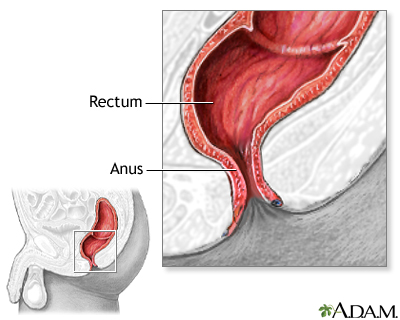
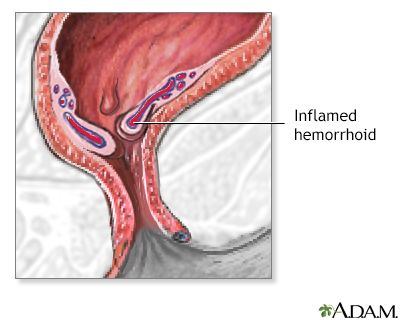
HemorrhoidectomyHemorrhoids are swollen veins around the anus. They may be inside the anus (internal hemorrhoids) or outside the anus (external hemorrhoids).
Hemorrhoids
Hemorrhoids are swollen veins in the anus or lower part of the rectum.

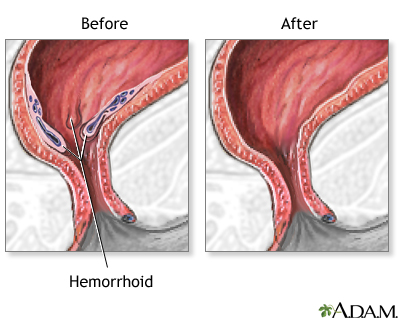
Often hemorrhoids do not cause problems. But if hemorrhoids bleed a lot, cause pain, or become swollen, hard, and painful, surgery can remove them.
Description
Hemorrhoid surgery can be done in your surgeon's office or in the hospital operating room. In most cases, you can go home the same day. The type of surgery you have depends on your symptoms and the location and size of the hemorrhoid.
Before the surgery, your surgeon will numb the area so you can stay awake, but not feel anything. For some types of surgery, you may be given general anesthesia. This means you will be given medicine in your vein that puts you to sleep and keeps you pain-free during surgery.
General anesthesia
General anesthesia is treatment with certain medicines that puts you into a deep sleep-like state so you do not feel pain during surgery. After you ...
Read Article Now Book Mark ArticleHemorrhoid surgery may involve:
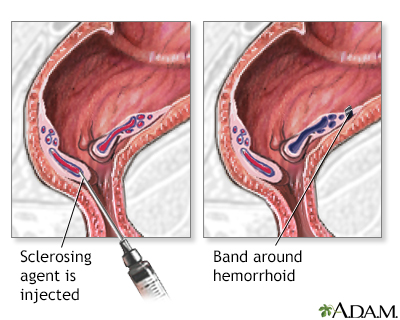
- Putting a small rubber band around an internal hemorrhoid to shrink it by blocking blood flow.
- Stapling a hemorrhoid to block blood flow, causing it to shrink.
- Using a knife (scalpel) to remove hemorrhoids. You may or may not have stitches.
- Injecting a chemical into the blood vessel of the hemorrhoid to shrink it.
- Using a laser to burn the hemorrhoid.
Why the Procedure Is Performed
Often, you can manage small hemorrhoids by:
- Eating a high fiber diet
- Drinking more water
- Avoiding constipation (taking a fiber supplement if needed)
- Not straining when you have a bowel movement
When these measures do not work and you are having bleeding and pain, your health care provider may recommend hemorrhoid surgery.
Risks
Risks for anesthesia and surgery in general are:
- Reactions to medicines, breathing problems
- Bleeding, blood clots, infection
Blood clots
Blood clots are clumps that occur when blood hardens from a liquid to a solid. A blood clot that forms inside one of your veins or arteries is calle...
 ImageRead Article Now Book Mark Article
Risks for this type of surgery include:
- Leaking a small amount of stool (long-term problems are rare)
- Problems passing urine because of the pain
- Constipation due to pain or pain medicines
Before the Procedure
Be sure to tell your surgeon if:
- You are or could be pregnant
- You are taking any medicines, including medicines, drugs, supplements, or herbs you bought without a prescription
- You have been drinking a lot of alcohol, more than 1 or 2 drinks a day
Planning for your surgery:
- If you have diabetes, heart disease, or other medical conditions, your surgeon may ask you to see the provider who treats you for these conditions.
Diabetes
Diabetes is a long-term (chronic) disease in which the body cannot regulate the amount of sugar in the blood.
 ImageRead Article Now Book Mark Article
Heart disease
Coronary heart disease is a narrowing of the blood vessels that supply blood and oxygen to the heart. Coronary heart disease (CHD) is also called co...
 ImageRead Article Now Book Mark Article
 - If you smoke, it's important to cut back or quit. Smoking can slow healing and increase the risk for blood clots. Ask your provider for help quitting smoking.
Smoking can slow healing and increase t...
Quitting smoking and other nicotine products, including e-cigarettes, before surgery can improve your recovery and outcome after surgery. Most people...
 ImageRead Article Now Book Mark Article
Quitting smoking
There are many ways to quit smoking. There are also resources to help you. Family members, friends, and co-workers may be supportive. But to be su...
ImageRead Article Now Book Mark Article - If needed, prepare your home to make it easier to recover after surgery.
Prepare your home
Getting your home ready after you have been in the hospital often requires some preparation. Set up your home to make your life easier and safer when...
Read Article Now Book Mark Article - Ask your surgeon if you need to arrange to have someone drive you home after your surgery.
During the week before your surgery:
- You may be asked to temporarily stop taking medicines that keep your blood from clotting. These medicines are called blood thinners. This includes over-the-counter medicines and supplements such as aspirin, ibuprofen (Advil, Motrin), naproxen (Aleve, Naprosyn), and vitamin E. Many prescription medicines are also blood thinners.
- Ask your surgeon which medicines you should still take on the day of your surgery.
- Prepare your home for any problems you might have getting around after the surgery.
- Let your surgeon know about any illness you may have before your surgery. This includes COVID-19, a cold, flu, fever, herpes outbreak, or other illness. If you do get sick, your surgery may need to be postponed.
COVID-19
Coronavirus disease 2019 (COVID-19) is a respiratory illness that causes fever, coughing, and shortness of breath, but many other symptoms can occur....
 ImageRead Article Now Book Mark Article
A cold
The common cold most often causes a runny nose, nasal congestion, and sneezing. You may also have a sore throat, cough, headache, or other symptoms....
 ImageRead Article Now Book Mark Article
Flu
The flu (influenza) is a viral respiratory illness that causes fever, chills, runny nose, body aches, and cough. It spreads easily from person to pe...
 ImageRead Article Now Book Mark Article
On the day of your surgery:
- Follow instructions about when to stop eating and drinking.
- Take the medicines your surgeon told you to take with a small sip of water.
- Follow instructions on when to arrive at the hospital. Be sure to arrive on time.
After the Procedure
You will usually go home the day of your surgery. Be sure you arrange to have someone drive you home. You may have a lot of pain after surgery as the area tightens and relaxes. You may be given medicines to relieve pain.
Follow instructions on how to care for yourself at home.
Instructions
You had a procedure to remove your hemorrhoid. Hemorrhoids are swollen veins in the anus or lower part of the rectum. Now that you're going home, fo...
Read Article Now Book Mark ArticleIf you have a lot of pain after a rubber band placement in the office, you should contact your surgeon.
You will be taking stool softeners. But if you are not able to have a bowel movement, you should contact your surgeon.
Outlook (Prognosis)
You should recover fully in a few weeks, depending on how involved the surgery was.
You will need to continue with diet and lifestyle changes to help prevent the hemorrhoids from coming back.
References
Abcarian AM, Abcarian H. Management of hemorrhoids. In: Cameron J, ed. Current Surgical Therapy. 14th ed. Philadelphia, PA: Elsevier; 2023:287-294.
Hyman N, Umanskiy K. Anus. In: Townsend CM Jr, Beauchamp RD, Evers BM, Mattox KL, eds. Sabiston Textbook of Surgery. 21st ed. St Louis, MO: Elsevier; 2022:chap 53.
Review Date: 7/9/2025
Reviewed By: John Meilahn, MD, General Surgeon, Wyndmoor, PA. Review provided by VeriMed Healthcare Network. Also reviewed by David C. Dugdale, MD, Medical Director, Brenda Conaway, Editorial Director, and the A.D.A.M. Editorial team.
 All rights reserved.